Last Pieces – Low Stock, Final Sizes, Outlet & Active Archive Styles
INISESS Last Pieces currently contains 14 active products, but the label does not mean every item literally has one physical unit remaining. Current data shows 6 active products at quantity 0, 3 at quantity 1 and others at 6, 7, 8, 13 and 20. The page therefore avoids artificial scarcity language and instead explains the verified stock distribution, possible size/variant uncertainty, product year, current special-price status and product type together.
What Last Pieces really means in this catalogue
INISESS Last Pieces currently contains 14 active products, but the category name does not mean every item literally has only one unit left. Current product quantity shows 6 active records at quantity 0, 3 at quantity 1, several at 6, 7 and 8, plus products at 13 and 20. The page therefore treats Last Pieces as a merchandising and low-stock intent category, not as proof that every listing is down to one physical unit.
What the current stock distribution looks like
Eight of the 14 active products show quantity above zero and six show quantity 0. Three products currently show quantity 1: a grey peplum jacket, a summer knitted dress and a denim straight skirt. A long-sleeve blouse shows 6, white cotton shorts 7, another summer knitted dress 8, a denim skirt 13 and a blouse-with-denim-skirt set 20. This distribution clearly shows that the category label and literal stock count are not identical.
How quantity-zero active products should be handled
Six products remain active while quantity is 0: a long Tencel-elastane denim skirt, a dark-green 3/4-sleeve blouse, anthracite wide-leg trousers, an anthracite skirt with decorative buttons, a Tencel denim summer blouse and a Tencel denim shirt with lace accents. They may still be visible in the catalogue, but the category should not describe them as in stock. Live purchase availability must be checked on the product page.
The products that currently show quantity 1
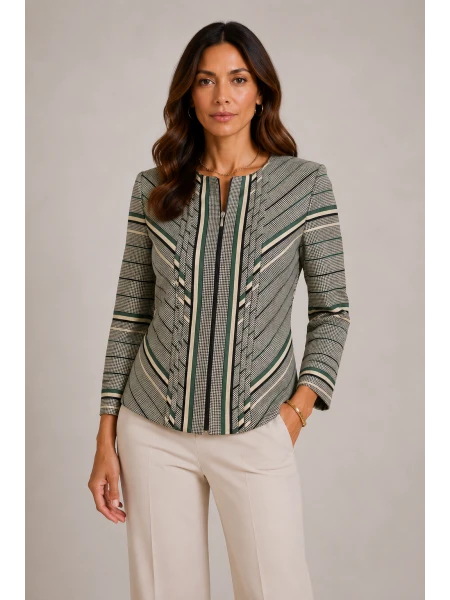
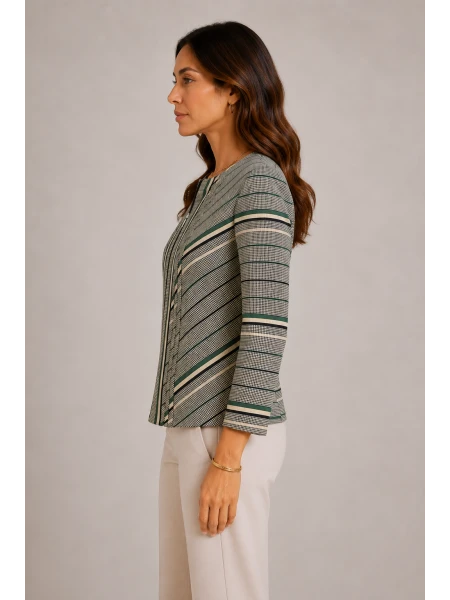
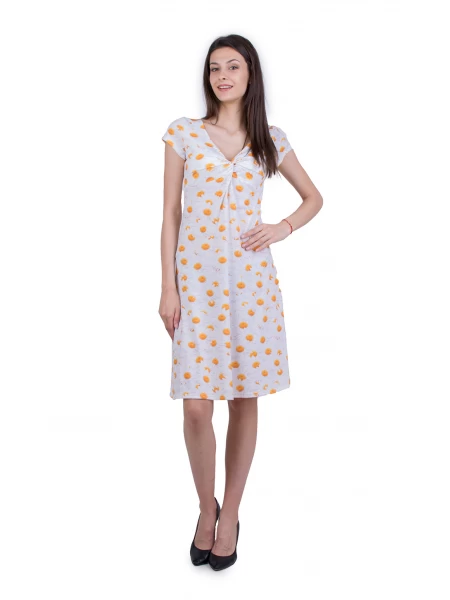
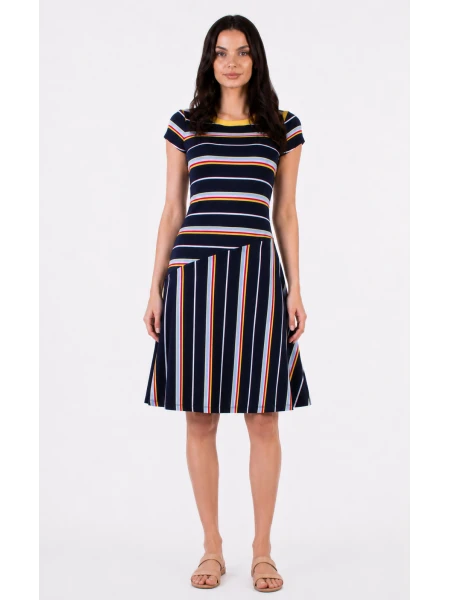
Model J 19505, a grey peplum jacket with green accents; R 21802, a summer knitted dress; and P 21730, a denim straight skirt all currently show product quantity 1. These are the clearest matches to the Last Pieces concept. Even so, product-level quantity does not necessarily prove that only one size or one variant remains. Size and option availability should still be verified before using strong scarcity language.
Why do some products show quantity 6 to 20?
A long-sleeve blouse, white cotton shorts, another summer knitted dress, a denim skirt and a blouse-with-denim-skirt set currently show 6, 7, 8, 13 and 20 units respectively. The category assignment may reflect historic merchandising, limited sizes or a category rule that is not directly synced to the product quantity field. Because the database does not document the exact reason, the content avoids guessing and simply reports the mismatch accurately.
Last Pieces is not a stock guarantee
The category title signals scarcity intent, but the live product page is the correct source at buying time. Product-level quantity may not match size- or colour-level stock if options are managed separately. A product showing 13 units does not mean every size is widely available, and a product showing 1 does not prove that one specific size is the only option. Current sizes, colours and selectable variants should be checked live.
Which years are represented?
The 14 active products come from 2017, 2020, 2021, 2022, 2025 and 2026. There is 1 product from 2026, 4 from 2025, 4 from 2022, 3 from 2021, 1 from 2020 and 1 from 2017. Last Pieces is therefore not simply an old-season clearance archive. A recently added product with low quantity can sit next to an older active product that still carries a higher quantity.
Why the 2026 peplum jacket stands out
Model J 19505 is a 2026-added grey women's peplum jacket with green accents and currently shows quantity 1. It also overlaps with Women's Blazers, Sale, Unique Pieces, Autumn and Spring. That makes it one of the strongest examples of the Last Pieces concept in the current data. The shopper should still verify shoulder fit, sleeve, closure, intended layers and live size availability before acting on the low quantity.
Tencel denim shirts and blouses
The 2024 Tencel denim shirt B 24307 and Tencel denim summer blouse B 24306 remain active but currently show quantity 0. Both overlap Sale, Unique Pieces, Spring and Summer categories. They may retain historic or merchandising value in the catalogue, but should not be presented as currently available without verification. Tencel denim can look softer or more fluid, yet actual composition, fabric weight and availability remain product-specific.
Anthracite trousers and skirt
N 24304 anthracite wide-leg trousers and P 24305 anthracite skirt with decorative buttons both currently show quantity 0. They also connect with Unique Pieces, and the skirt overlaps Spring and Summer. These products can remain useful catalogue references, but active status should not be confused with live purchase availability. Shoppers seeking alternatives should move into the relevant specialist trouser or skirt category.
Denim skirts are a visible theme
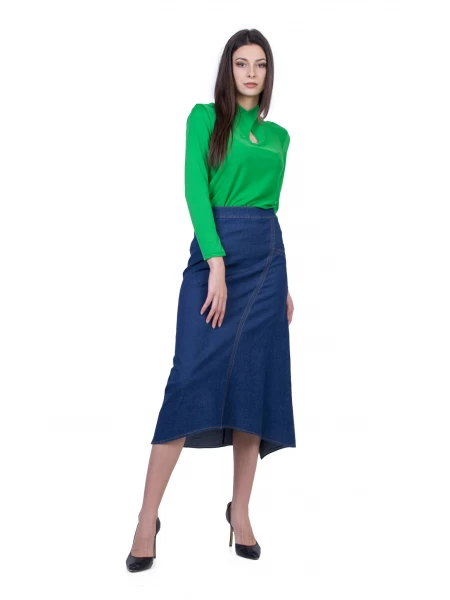
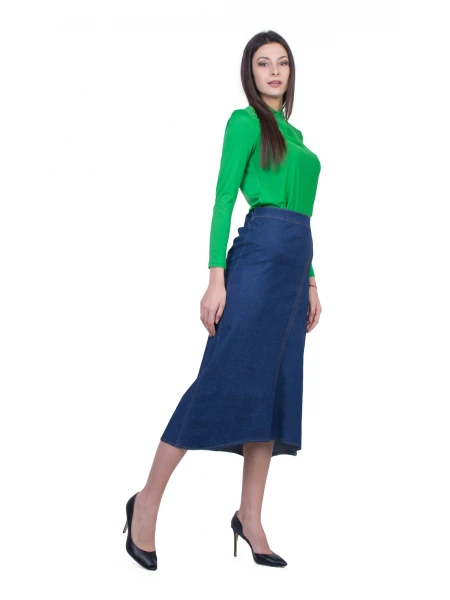
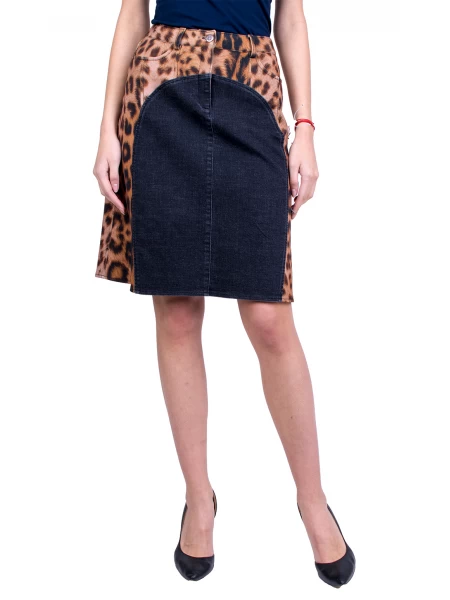
Several products carry a denim-skirt direction: a long Tencel-elastane denim skirt, a denim straight skirt, another denim skirt and a coordinated set using a denim skirt. Three products overlap Women's Skirts. Waist-hip fit, length, fabric stiffness and movement remain key. Scarcity pressure should never justify buying the wrong size in denim.
Summer knitted dresses
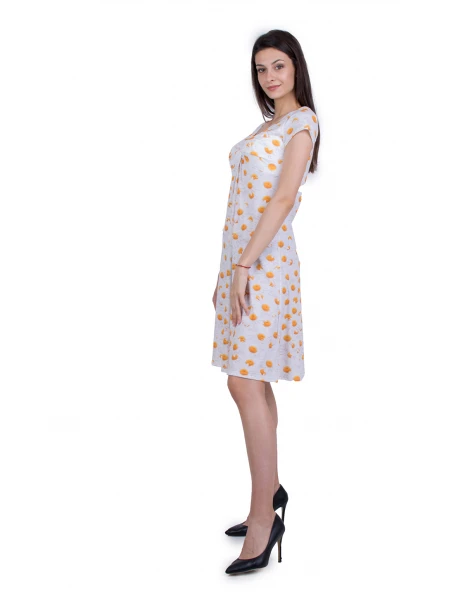
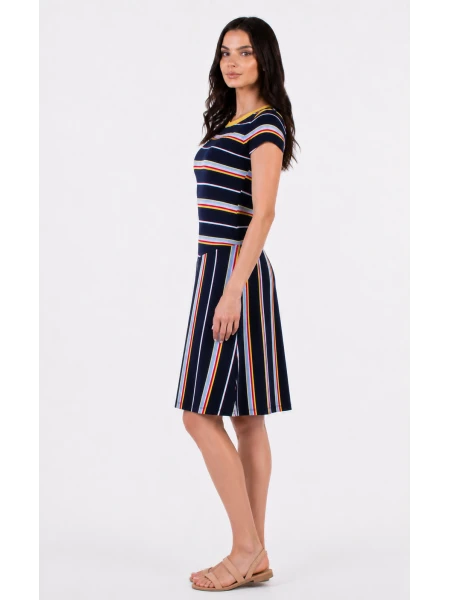
Two active summer knitted dresses appear: R 21802 currently at quantity 1 and R 21701 at quantity 8. Both overlap Women's Dresses and carry Spring/Summer relevance. Their different quantities show again that the category name is not a literal unit count. Knit construction may provide flexibility, but body length, lining, stretch and care still require product-level review.
The long-sleeve blouse
B 22118 is a 2022 long-sleeve women's blouse showing quantity 6. It overlaps Sale, Women's Shirts & Blouses, Autumn, Spring and Summer. That total quantity is another example of why Last Pieces should be treated as a merchandising label rather than a literal statement. The garment may still have narrow size availability, but that cannot be concluded from product quantity alone.
White cotton shorts
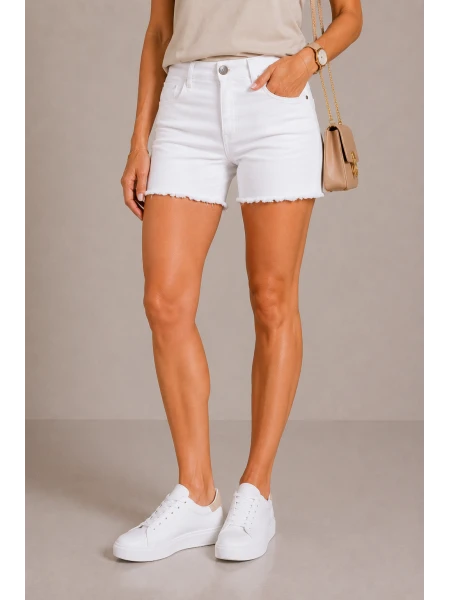
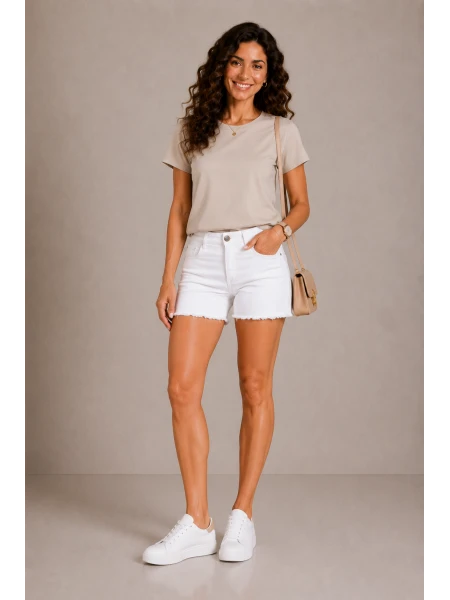
N 20187 is a 2020 white cotton shorts product showing quantity 7. It overlaps Women's Clothing, Sale, Women's Trousers, Spring-Summer 2020, Summer and Last Pieces. With white bottoms, opacity, pocket-bag visibility, lining and underwear contrast can matter. “Cotton” is useful directional information but does not prove the full fibre ratio, weight or opacity. The live product details should decide.
Blouse with denim-skirt set
BP 22118-102 currently shows quantity 20, one of the highest totals in the category. It overlaps Women's Sets & Outfits, Autumn, Spring, Summer and Spring-Summer 2022. This is clear evidence that Last Pieces can preserve a historic merchandising assignment. Package contents, how top and bottom sizing works and whether the product is sold as a complete set should all be confirmed on the live page.
Relationship with Women's Clothing
Eight of the 14 active products overlap Women's Clothing. Last Pieces is not the authority page for one garment type; it is a horizontal low-stock or merchandising layer. Once the shopper knows whether they want a skirt, dress, shirt, blazer or trouser, the specialist category provides a stronger comparison environment.
Relationship with Sale
Twelve active products overlap Sale, and 13 of the 14 active products currently have a valid active special price. Those are different facts: category membership and current special-price status are separate systems. Discounting is therefore common within Last Pieces, but low stock does not automatically mean sale pricing and sale pricing does not prove that stock is low.
Relationship with Unique Pieces
Five active products overlap Unique Pieces. Anthracite trousers, the decorative-button skirt, Tencel denim blouse, Tencel denim shirt and the 2026 peplum jacket may be part of this overlap. A unique or distinctive designation can describe design direction, but it does not by itself establish quantity 1, final stock or a discount.
Spring and Summer dominate the category
Twelve active products overlap Spring and 11 overlap Summer. This shows a strong concentration of lighter and transitional merchandise. Some products also appear in Autumn and one in Winter. Stock status should therefore not be treated as seasonal guidance. Spring Women's Clothing and Summer Women's Clothing provide broader seasonal comparison.
Autumn and Winter overlaps
Six active products overlap Autumn Women's Clothing, while one overlaps Winter Women's Clothing. Denim skirts, blazers and long-sleeve tops can extend into transitional dressing. A Winter mapping does not automatically mean a garment is heavy or highly insulating; actual fabric and lining must be checked.
The label should not create artificial urgency
Scarcity language can increase conversion but becomes misleading when the data does not support it. A product showing quantity 20 should not be described as “only one left.” The page therefore encourages checking real size, stock and fit rather than rushing. Even a product at quantity 1 is not worth buying if the size, fabric or use case is wrong.
Product quantity is not always size stock
OpenCart's product quantity field can represent total stock while size or colour options may use separate stock logic. Without verifying every option record, the content should not claim “only size M remains” or similar. The safest user-facing rule is simple: current size, colour and stock should be checked on the live product page.
Why can quantity-zero products remain active?
An OpenCart product can remain status=1 while quantity=0 and still be visible depending on store configuration. It may support preorder, remain visible for SEO or archive value, or simply retain catalogue status. The database does not provide one universal reason. The content therefore does not say the item is permanently discontinued; it only explains that the current product quantity is zero.
Can a restock be guaranteed?
No. There is no reliable category-level field proving that a quantity-zero product will be replenished or that a quantity-one item will never return. Stock may change, options may be updated or the product may remain unavailable. Restock language should therefore be limited to what the live product page or the store can confirm.
Last Pieces and Outlet are not the same concept
The existing English SEO URL is `outlet-product-with-big-sale`, but Last Pieces describes stock or merchandising intent while outlet and sale describe commercial pricing or channel concepts. Twelve products overlap Sale and 13 carry active specials, yet the concepts are still not identical. The historical URL remains unchanged for continuity; the content explains the difference instead of forcing them together.
Last Pieces does not automatically mean old season
The current category includes a 2026 peplum jacket as well as a 2017 denim skirt. A recently added item can have quantity 1, while an older item can remain active with quantity 20. Product year and stock are separate dimensions. The page preserves the real year instead of presenting every item as either new or obsolete.
Last Pieces does not automatically mean unique
Five products overlap Unique Pieces, but the entire category does not. A unique design also does not automatically mean one unit remains. Distinctiveness, quantity, special price and season are separate data points. Shoppers should not collapse them into one emotional label such as “rare, discounted and almost gone” unless each part is actually verified.
How to approach a quantity-one item
First confirm the size and product measurements, then assess fabric and intended use. If the product is wrong, quantity 1 does not make it right. If it is genuinely suitable, low quantity may affect timing, but the page should not use fake countdowns or pressure language. Scarcity information should be limited to verified facts.
How to approach a quantity-zero item
An active item with quantity 0 may not have a purchasable option. Adding it to favourites, checking for future availability or moving to a specialist category may be more useful than treating the page as live stock. The content should never say “in stock,” “ships now” or “last few units” for a quantity-zero record.
Is quantity 6–10 really a Last Piece?
At product level, 6–10 units is clearly not literally one unit. Size distribution may still be narrow, or the category assignment may reflect an older merchandising rule. Without option-level verification, the right approach is to state the product quantity honestly and avoid manufacturing scarcity. Fit and wardrobe value still come before the label.
How should quantity 13–20 be interpreted?
These figures clearly conflict with a literal reading of Last Pieces. A denim skirt shows 13 and the denim-skirt set shows 20. The category relationship may not be automatically synced to a stock threshold. The database does not prove the exact mechanism, so the page presents the mismatch transparently rather than inventing an explanation.
Why size accuracy matters more when stock feels scarce
Low-stock framing can tempt shoppers to accept a size too small or too large. That risk matters especially with blazers, trousers, skirts and dresses. Shoulder, waist, hip, torso and hem issues can reduce real wear. Tailoring may help in some cases, but cost and feasibility vary. Scarcity should never outrank correct fit.
Blazer and peplum-jacket fit
Structured peplum jackets require attention to shoulder, bust, waist, sleeve and closure. Quantity 1 does not make an incorrect shoulder fit acceptable. The jacket should be imagined open and closed and over the layers actually intended. Peplum placement at the waist and hip also changes proportion and should be assessed from the live images.
Dress fit and real use
Summer knitted dresses require attention to bust, waist, hip, torso and overall length. Knit can add stretch, but it does not mean one size suits everyone. The quantity-one dress should not be purchased in the wrong size simply because stock appears scarce. The quantity-eight dress also needs live size verification because total quantity does not describe option distribution.
Skirt waist, hip and length
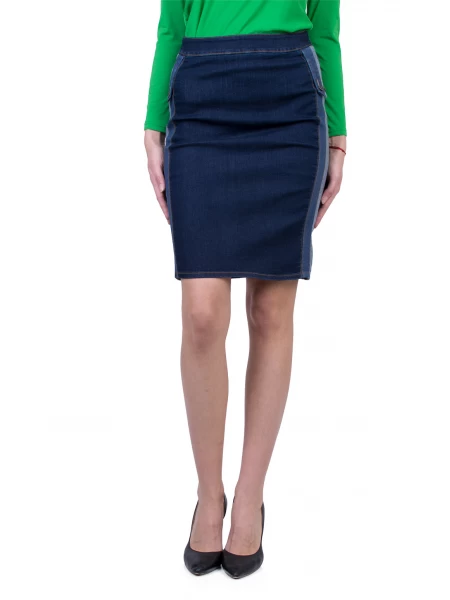
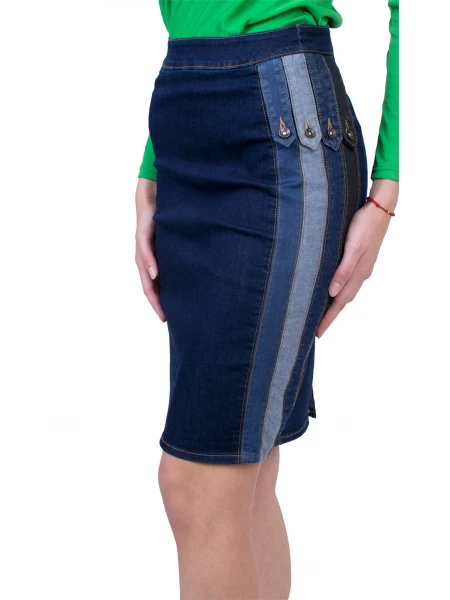
Denim and anthracite skirts should be judged by waist-hip fit, length, slit or button placement and fabric structure. Long denim skirts also interact with footwear and walking stride. Last Pieces status does not compensate for the wrong skirt length or restrictive movement. Comparing measurements with a well-fitting skirt already owned can help.
Wide-leg trousers and footwear
The anthracite wide-leg trousers currently show quantity 0 but remain active. Wide-leg trousers need correct waist and hip fit, appropriate drape and a hem length that works with the intended shoes. If they return to stock, those criteria still matter. A long hem dragging on the ground can reduce practicality regardless of how scarce the product once was.
Blouses and shirts: shoulder, sleeve and opacity
Long-sleeve, 3/4-sleeve and Tencel denim tops should be checked for shoulder position, armhole comfort, sleeve movement and opacity. The lace-accent denim shirt may be more decorative, while the simple long-sleeve blouse may offer broader repeat use. Stock level does not change fabric care or fit requirements.
White shorts and opacity
The white cotton shorts currently show quantity 7. With pale bottoms, pocket bags, lining, fabric density and undergarment contrast can affect the look. A cotton label does not guarantee full opacity. Waist-hip fit and leg opening also influence comfort. The live product photography and details should be reviewed before interpreting the category as a final-stock opportunity.
How the denim pieces differ
Classic denim, Tencel denim and denim with elastane all appear in the category. They can behave differently in stiffness, stretch and drape. Tencel denim may look softer; elastane may add flexibility. Exact composition should be verified before making technical claims. Skirts, shirts and coordinated sets should be selected according to actual movement and care needs.
How to evaluate a discounted Last Piece
When a product appears in both Last Pieces and Sale, two different questions need answers: what is the current stock status, and is the special price active? Thirteen active products currently have a valid special, showing that discounts are common here. But a strong discount still does not make the wrong size or wrong garment useful.
Use cost per wear instead of scarcity emotion
Last Pieces can create a “buy it before it disappears” feeling. A better filter is how often the garment will realistically be worn. A quantity-one item used once may deliver less value than a quantity-eight dress or blouse that works in many outfits. Scarcity and wardrobe value are different measurements.
The three-outfit test
Before buying, imagine at least three outfits using pieces already owned. A denim skirt may work with several blouses, a blazer with trousers and skirts, and a Tencel denim shirt with jeans or tailored trousers. If the item requires a new bag, shoes and additional clothes before it becomes wearable, the real cost rises.
Shopping out of season
Last Pieces combines Spring, Summer, Autumn and a small Winter overlap. Buying a scarce item outside its immediate season can make sense for future use, but current fit, storage, care and real need should still be considered. “It may disappear” is not enough reason to buy something that will not be used for months.
Older active products can still have value
Products from 2017, 2020, 2021 and 2022 should not be rewritten as current-season launches. They can still function as active archive pieces if the cut, fabric and size remain useful. Long denim skirts, basic blouses and knitted dresses can remain wearable long after launch. The original year should stay visible without automatically becoming a negative label.
New products can also be low in stock
The 2026 peplum jacket demonstrates that Last Pieces is not purely a clearance archive. A recent product can show quantity 1. The database does not explain whether that comes from a small production run, fast sales or another stock rule. The content should state only the verified year and quantity rather than guessing the cause.
Why product photography matters
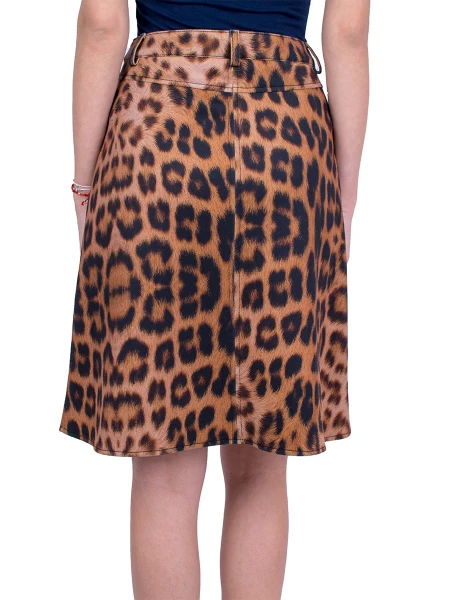
Scarcity can encourage quick decisions, so image review becomes more important. Front, side, back and detail images reveal different information about shoulders, seams, buttons, denim texture, colour and length. Screen brightness can shift anthracite, grey, white and denim tones. The category label should never replace careful visual review.
Why the full product description matters
A product name rarely includes all technical details. Fibre composition, lining, fastening, pockets, care, fit and measurements may appear deeper in the description. Quantity 1 is not a reason to skip that information. Claims about Tencel, cotton, elastane or knit should be checked against the product record rather than assumed from the headline alone.
Care cost still matters
Older-season, discounted or scarce products still carry their real maintenance requirements. Delicate washing, low heat, hand washing or professional cleaning can affect total ownership cost. A low purchase price may not create good value if the care routine does not suit the buyer. The garment's care label is more reliable than a general category statement.
Alteration cost should be included
A quantity-one garment in the wrong size can look tempting if tailoring seems possible. But a trouser hem or skirt length is not the same alteration as shoulders, bust structure or a complex peplum shape. Cost and outcome vary. If the measurements are fundamentally wrong, Last Pieces status does not create an obligation to buy.
Wait for restock or find an alternative?
If a quantity-zero item has no verified restock date, moving to a specialist category can be more efficient. For trousers use Women's Trousers; for skirts Women's Skirts; for shirts and blouses Women's Shirts & Blouses; for jackets Women's Blazers. These pages offer broader product comparison.
Product-type navigation inside Last Pieces
This is a small but varied category containing blazer, dresses, skirts, trousers, blouses, shirts, shorts and a set. A shopper may enter because of scarcity intent and then need to narrow by garment type. Internal links should therefore support product-authority pages rather than turning Last Pieces into a substitute for every category.
The set-product issue
BP 22118-102 overlaps Women's Sets & Outfits and currently shows quantity 20. That figure conflicts with a literal “last piece” reading. Package contents, top-bottom size relationship and whether the listing is sold as a full set should be checked on the product page. The category label does not answer those technical questions.
Colour choice when options feel limited
Grey and green peplum, anthracite, dark green, white and denim directions all appear. Scarcity may reduce colour choice, but it is still better to skip a colour that does not work with the wardrobe. A useful choice should connect with existing shoes, bags, tops and outer layers. Limited choice does not make every available colour correct.
Statement versus staple
The peplum jacket, decorative-button skirt and lace-accent Tencel denim shirt can function as stronger statement pieces, while the long-sleeve blouse, denim skirt or white shorts may behave more like repeatable staples. Last Pieces does not make one type superior. The better choice depends on the gap in the shopper's wardrobe and expected wear frequency.
Discounted but quantity zero
A product can carry a valid special price while product quantity is 0. In that case the price advantage may be theoretical if no purchasable option is available. Horizontal categories such as Sale and Last Pieces need stock, price and options to be read together. “Discounted” does not automatically mean “orderable now.”
Quantity-positive but no active special
Thirteen of the 14 active products currently have a valid special, so one active Last Pieces product does not. This confirms that low-stock merchandising and discount pricing are separate dimensions. A scarce product can remain at regular price; a discounted product can show relatively high quantity. The labels should not be merged into one claim.
Quick pre-purchase checklist
Check whether the product is truly quantity-positive, whether the correct size and colour are selectable, the original product year, whether a special price is active, fabric composition, lining or opacity, intended season, at least three wardrobe combinations and any likely tailoring need. These questions are more useful than the Last Pieces label by itself.
Category data changes over time
Today the category shows 14 active products, 8 quantity-positive records, 6 quantity-zero records and 3 products at quantity 1. Sales, restocks or catalogue updates can change that distribution. The category description reflects the verified state at the time of audit and does not function as a permanent stock promise.
Where Last Pieces sits in the site silo
Last Pieces does not replace Women's Clothing or the specialist product categories. It is a horizontal scarcity/merchandising layer. Once the garment type is clear, Women's Dresses, Women's Skirts, Women's Trousers, Women's Shirts & Blouses or Women's Blazers provide the stronger product-authority route for comparison.
Frequently Asked Questions about Last Pieces
How many active products are in Last Pieces?
There are currently 14 active products.
Are they all literally down to one unit?
No. Only three products currently show quantity 1; others show 6, 7, 8, 13 or 20.
How many active products show quantity 0?
Six active records currently show quantity 0.
How many show quantity above zero?
Eight active products currently show quantity above zero.
Which products show quantity 1?
J 19505 peplum jacket, R 21802 summer knitted dress and P 21730 denim straight skirt.
Why does the category name not match every quantity?
The assignment may reflect merchandising or historic category logic; the database does not document one exact reason.
Will out-of-stock products return?
That cannot be guaranteed. Current availability should be verified on the live product page or with the store.
Is Last Pieces the same as Sale?
No. Many products overlap Sale and 13 have active specials, but stock intent and pricing are separate concepts.
Is the category only old-season merchandise?
No. It includes a 2026 product and spans 2017–2026.
Can a quantity-zero product still be purchased?
That cannot be assumed; live options and store configuration must be checked.
Does product quantity equal size stock?
Not always. Size or option inventory may be managed separately.
Should I buy the wrong size because it is a Last Piece?
No. Low stock does not make the wrong size a good choice.
How many products currently have an active special price?
Thirteen of the 14 active products currently have a valid special.
Will the SEO URL change?
No. The existing `outlet-product-with-big-sale` URL is preserved.
What is the safest shopping approach?
Verify the correct size, live stock, fabric, actual use and current price together.